
N+N 155
Wired for Art

Research
A Cross-Cultural Perspective on the Significance of Music and Dance on Culture and Society, with Insight from BaYaka Pygmies: “It is suggested that participation in music and dance activities provides experiences of aesthetic principles which in turn may influence “foundational cultural schemas” affecting multiple cultural domains: from cosmology to architectural style, from hunting and gathering techniques to political organization. Such dance and musical participation inculcates culture not as a text or set of rules, but as a profound aesthetic orientation.”
Around the web
“Art is fused with craft; craft is made of practice; and all of it is sort of stretched across the armature of genre. Creative work begins with an impulse for WORK, the kind of thing you want to spend your time doing, to which narrative and emotional material is quickly added.” - Robin Sloan
“I am the greatest Keith Moon style drummer in the world.” - Keith Moon
“We’re standing on the verge of a cultural shift in which the arts can deliver potent, accessible, proven health and well-being solutions to billions of people.” - Ivy Ross + Susan Magsamen
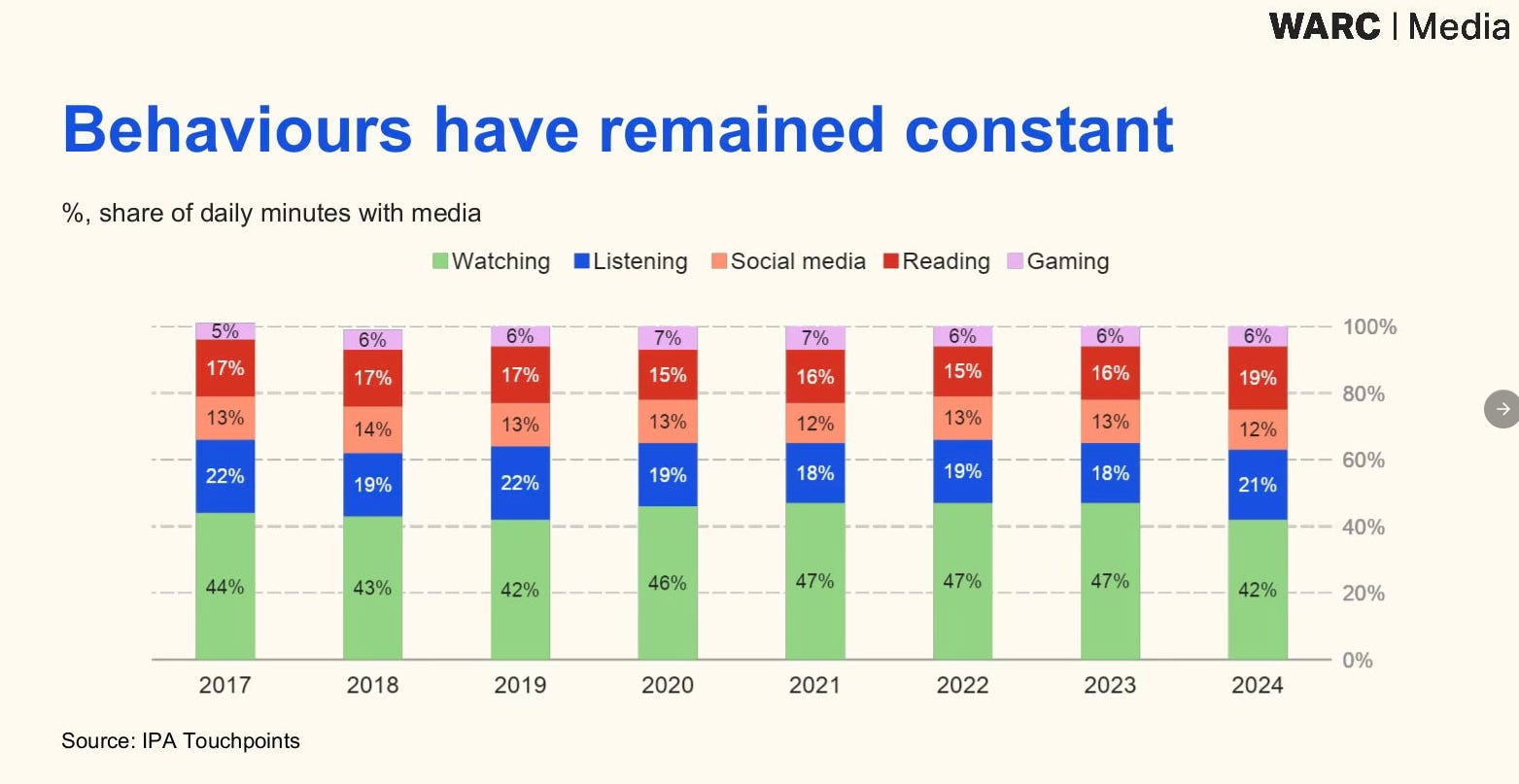
“The modern smartphone, laden with the corporate ecosystem pulsing underneath its screen, robs us of this feeling, conspires to keep us from “true” fullness. The swiping, the news cycles, the screaming, the idiocy — if anything destroys a muse, it’s this. If anything keeps you locked into a fetid loop of looking, looking, and looking once more at the train wreck, it’s this. I find it impossible to feel fullness, even in the slightest, after having spent just a bit of a day in the thralls of the algorithms.
The smartphone eradicates “space” in the mind. With that psychic loss of space, grace becomes impossible. You see the knock-on effects of this rippling out across the world politically…
Here’s a secret: The most successful (and certainly most prolific) creative people are pros at protecting and amplifying the number of full days in their lives. Owning your days is a superpower.” - Craig Mod
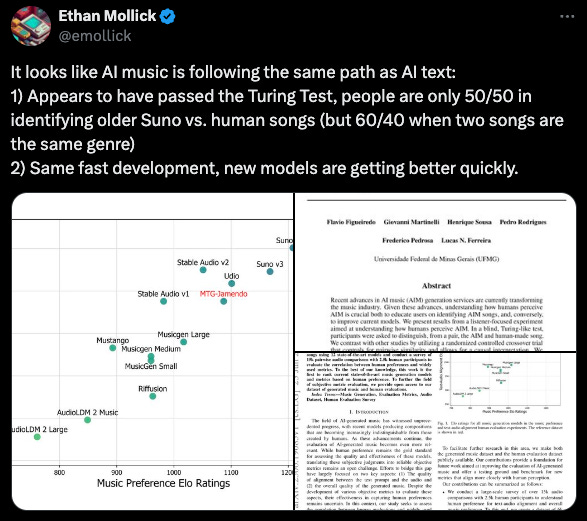
Here’s the research noted above. And a related piece in Scientific American. More generally, audiences tend to vary widely in listening expertise. For example, the paper notes longer practical musical experience (over five years) significantly increased the chance of correct identification, as did prior knowledge of AI-generated music. Nonetheless, it’s a good opportunity to reflect on the cues we rely on to make distinctions.
With a creative nod to John Cage, Paul McCartney has released a recording of an empty music studio to protest copyright infringements by AI companies
Is AI turning music streaming services into comment sections?
Nilay Patel warns that the proliferation of AI slop is going to make life even harder for creators
From ElevenLabs, Iconic Marketplace - “License AI voices and IP of history’s most iconic figures for your creative projects. Request licensing for entertainment legends, sports heroes, musical pioneers, and transformative historical figures. Our marketplace connects creators with rights holders for the most iconic IP.” Initial offering includes Michael Cane, Mathew McConaughey and Maya Angelou. Michael Caine’s voice in an advert for a vacuum? 🤷
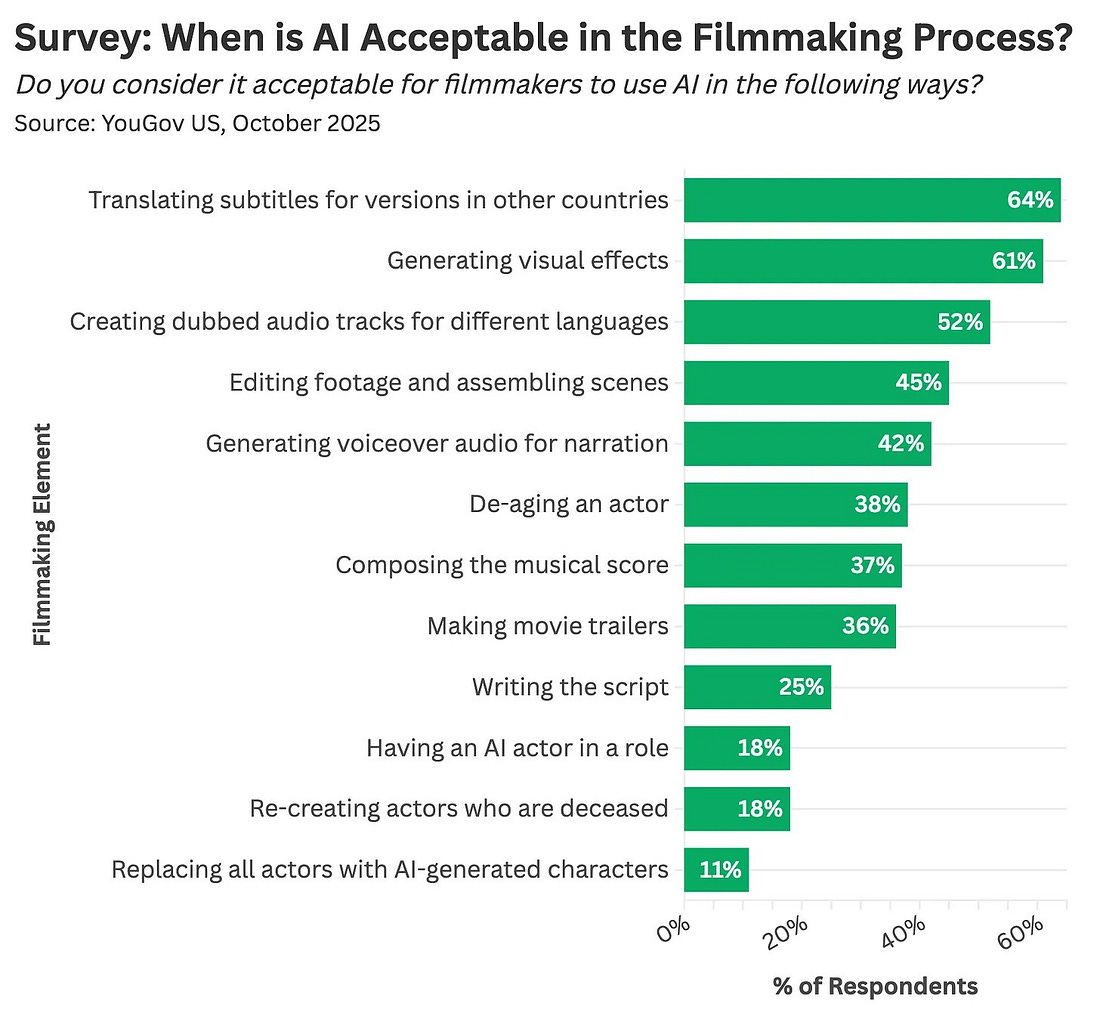
“Experience is algorithmically incompressible.” - Ted Chiang
Listening and watching
Things we’re interested in
Research: Your record collection is lowering your dementia risk by 40%
Research: Humming generates the lowest stress index compared to physical activity, emotional stress, and sleep
Research: Music-making and active listening enhances grey matter (significantly!) and working memory
Research: Going to the theatre or visiting a museum lowers your mortality risk by 31%
Research: Singing bowls appear to synchronise brain waves effectively facilitating meditation and relaxation
👉 Rick Allen spoke at AES 2025: Sound Design: the Art and Science
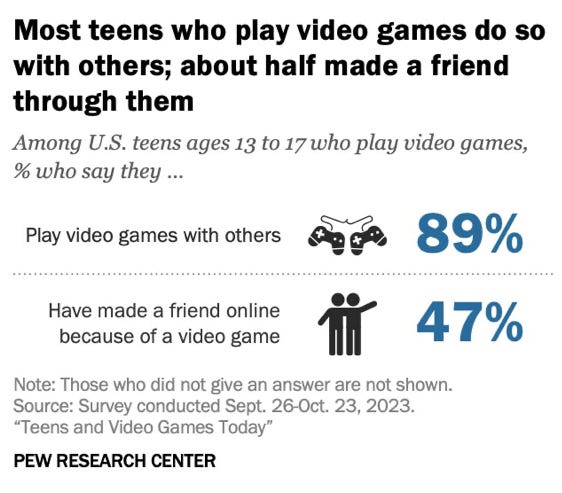
The iconic sound design of World of Warcraft
I’m a novelist who’s just bought a video games company. Here’s why you should care about games writing: “Games are still such a young form… video games and the traditional humanities have a lot to learn from each other.”
Report: State of AI in Creative Work 2026 by Envato
48.6% of creative professionals use AI daily and it has reshaped how they work.
19% describe themselves as “conflicted” — excited but worried in equal measure. Just 3% actively avoid AI.
Half of all 1,780 respondents say they’re using AI “significantly more” now than six months ago
58% plan to spend less than $500 on AI tools over the next six months.
“If there’s one AI skill everyone should learn, it’s this: breaking problems down. When you overload a model with too much information, the output usually gets worse. So you have to split the problem into clear, logical pieces and describe each part in a way the AI can understand. Right now, learning how to communicate with AI, how to speak its language, is one of the most valuable skills you can have” - Ohneis
Also noted in the report and then by CreativeBloq, there is a generational divide: “Gen Z has taken the lead in AI adoption, with more than half saying they use AI in their creative work every day. They’ve grown up remixing, reinterpreting, and retooling, so integrating AI feels like a natural extension of that mindset.”
Question
Why is it so easy to flood streaming with AI slop?
Closing notes
You are reaching the end of the newsletter. Thanks so much for reading!
I hope it’s not been too much of an intrusion and if you liked this issue of the newsletter, please share or recommend to a friend or colleague.
There may be an occasional typo. Woops! There isn’t much I can do once the email has sent, but I do try to correct and update the web version.
Until next week…
RSS
Thanks for reading Creative Audio! Subscribe for free to receive new posts and support our work.