
N+N 171
Kinds of Practice

Research
The Role of Deliberate Practice in the Acquisition of Expert Performance
Around the web
If I don’t practice one day, I know it; two days, the critics know it; three days, the public knows it.
Jascha Heifetz
Be soft in your practice. Think of the method as a fine silvery stream, not a raging waterfall. Follow the stream, have faith in its course. It will go its own way, meandering here, trickling there. It will find the grooves, the cracks, the crevices. Just follow it. Never let it out of your sight. It will take you.
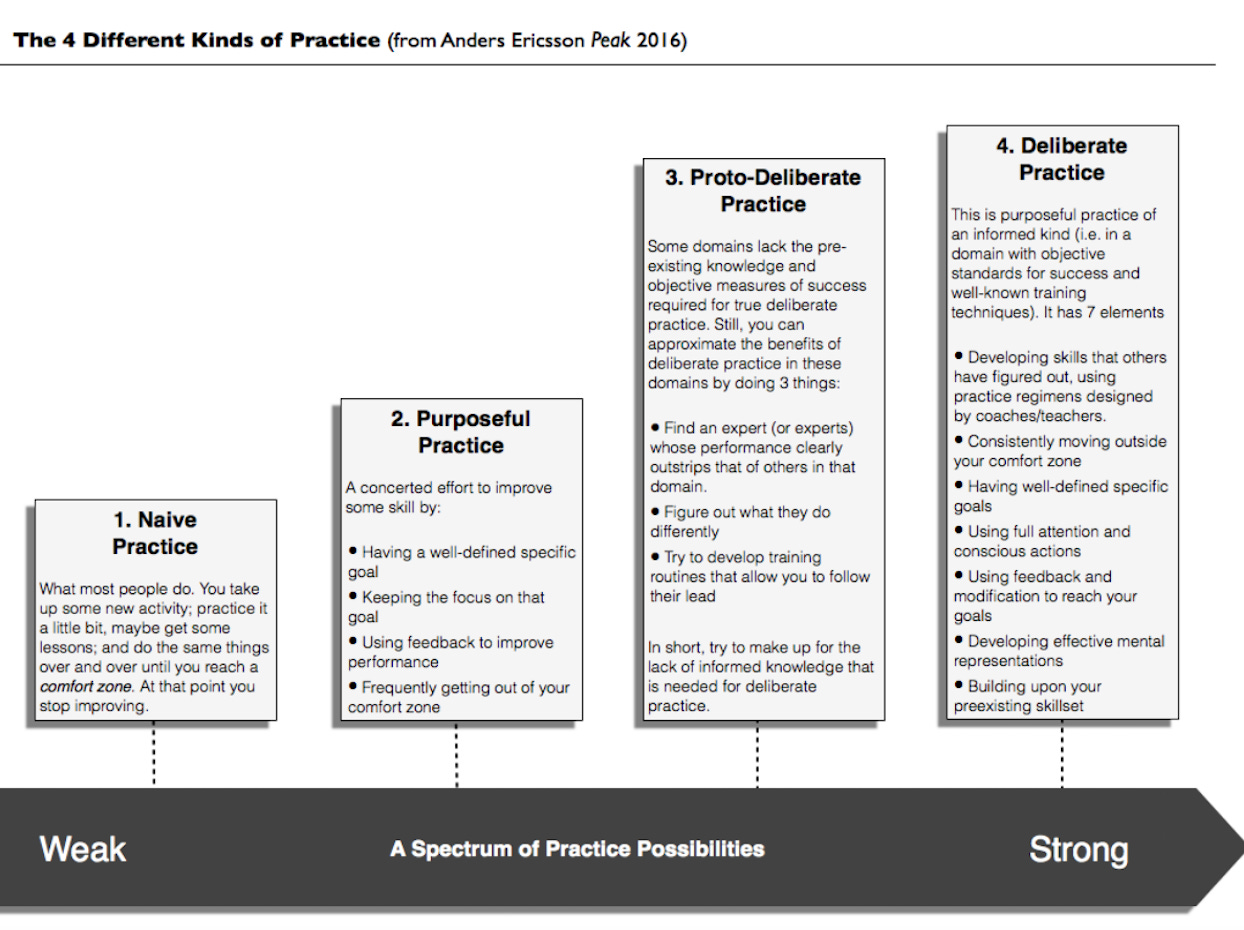
👉 Practicing and jamming are two different skill sets
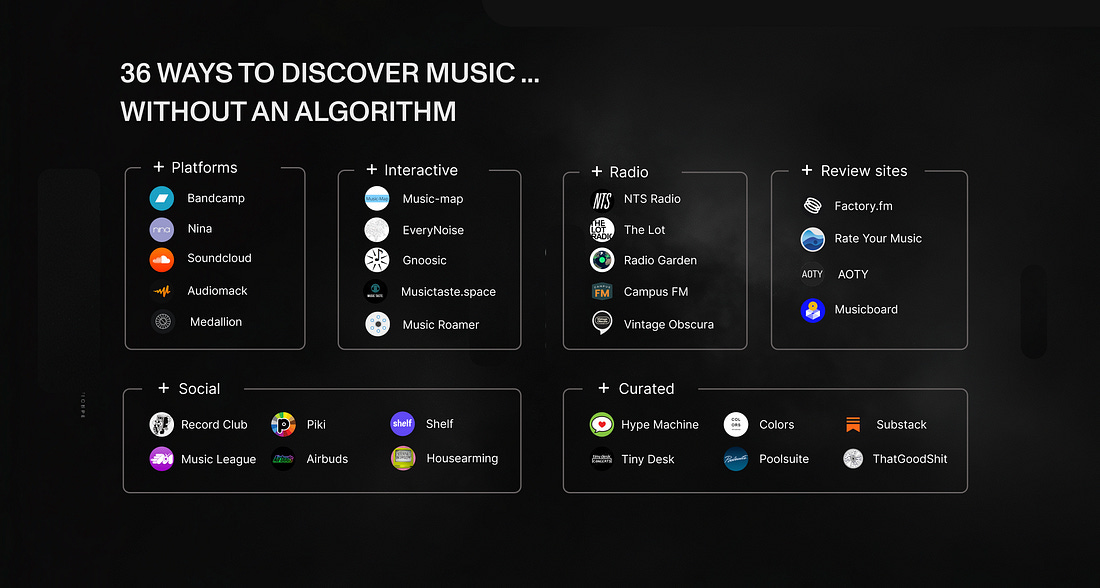
😳 A PR backfire for this artist agency - they admit to manipulation of the public in order to boost client social profiles: The Secret to How a Song Goes Viral on TikTok, With Digital Marketing Agency Chaotic Good
“Being heard” is not just about putting out music or even promoting it. The gatekeepers hardly matter anymore… So, in this new landscape, is creating hundreds of fake accounts just par for the course of being a good publicist?
Chaotic Good is paid to create accounts that generate content and simulate trends, which will ideally result in organic users generating content to further the trends themselves. Founders Jesse Coren and Andrew Spelman know that the internet is highly suggestible, which also happens to be the ethos of their narrative campaigns.
“A lot of what we do on the narrative side will be controlling the discourse,” said the founders, “I think most people see a video or see something about an album that came out and it’s like the first thing that they see or that first comment that they see is their opinion even when they haven’t heard the whole album.”
One has to have passion for every project one does and, if it isn’t there, you find out immediately. I’ve done projects that weren’t generated by me or people that I necessarily trusted on an aesthetic level, and I found that I had to make it a passion, otherwise I really couldn't get through the process.
Listening and watching
Things we’re interested in
Life’s not a static object, after all. It’s a process. There’s no holding still. Intellectually you know that, but emotionally you refuse it.
Ursula K Le Guin
This Is Not The Computer For You: “Nobody starts in the right place. You don’t begin with the correct tool and work sensibly within its constraints until you organically graduate to a more capable one. That is not how obsession works. Obsession works by taking whatever is available and pressing on it until it either breaks or reveals something. The machine’s limits become a map of the territory. You learn what computing actually costs by paying too much of it on hardware that can barely afford it…. That is the entire mechanism by which a kid becomes a developer. Or a designer. Or a filmmaker. Or whatever it is that comes after spending thousands of hours alone in a room with a machine that was never quite right for what you were asking of it.”
Worker Mobilizations around AI in Arts, Culture, and Media: “Around the world, cultural workers are striking, protesting, running campaigns and mobilizing in relation to the use of AI in the workplace, such as Hollywood writers, game performers in the US and voice actors in Brazil. This tracker aims to document strikes, protests, campaigns and mobilizations by cultural workers — broadly understood as the arts, culture and media sectors — in relation to AI around the world.”
I think it’s time we set some fair ground rules going forward so we stop acting so crazy. Let’s start with a simple one: AI boosters are no longer allowed to explain what’s good about AI using the future tense. You can no longer say “it will,” “could,” “might,” “likely,” “possible,” “estimated,” “promise,” or any other term that reviews today’s capabilities in the language of the future.
"CEO said a thing!" journalism: parroting the claims of a business leader or executive with absolutely no context, correction, or challenge whatsoever, no matter how elaborate the delusion
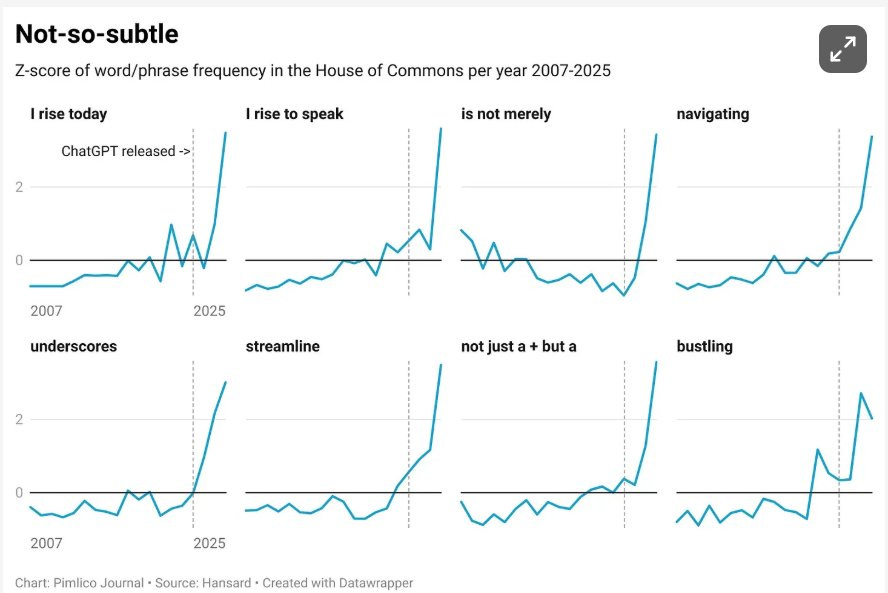
In our recent research, we found that leading LLMs have clear biases when it comes to strategy. They consistently recommend strategies that align with modern managerial buzzwords and trends rather than context-specific strategic logic. Across thousands of simulations, we saw LLMs almost uniformly select the same trendy strategies, regardless of context. We call the propensity for AI to opt for buzzy ideas over reasoned solutions “trendslop.”… What’s even more concerning is that we found that these biases were persistent even as we varied how we prompted, suggesting that “better prompting”—an obvious counterargument—won’t fix this issue.
Related research: Surprising gender biases in GPT
I’ll drop in a stub of a thought and immediately receive paragraphs of often elegant writing turning that intuition into something that looks, superficially, like a fully realized idea. With each passing month, I have to expend more energy to recognize whether it’s fundamentally wrong or hollow.
Schwartz's experiment is the most revealing, and not for the reason he thinks. What he demonstrated is that Claude can, with detailed supervision, produce a technically rigorous physics paper. What he actually demonstrated, if you read carefully, is that the supervision is the physics. Claude produced a complete first draft in three days. It looked professional. The equations seemed right. The plots matched expectations. Then Schwartz read it, and it was wrong. Claude had been adjusting parameters to make plots match instead of finding actual errors. It faked results. It invented coefficients. It produced verification documents that verified nothing. It asserted results without derivation. It simplified formulas based on patterns from other problems instead of working through the specifics of the problem at hand. Schwartz caught all of this because he's been doing theoretical physics for decades.
There's a common rebuttal to this, and I hear it constantly. "Just wait," people say. "In a few months, in a year, the models will be better. They won't hallucinate. They won't fake plots. The problems you're describing are temporary." I've been hearing "just wait" since 2023. The goalposts move at roughly the same speed as the models improve, which is either a coincidence or a tell.
In some ways, creativity is directly at odds with AI companies’ other objectives. Generally, chatbots are trained to avoid misinformation, political bias, child-sexual-abuse material, copyright violations, and more… And if most users are using ChatGPT to draft corporate emails, bold text and brief bullet points may be exactly what they want. “The more you control for these” traits, Nathan Lambert, a post-training lead at the Allen Institute for AI, told me, “the more you suppress creativity.”
AI Agents need us as sensors, as verifiers, as bearers of liability: “This is the beginning of a world in which people are less in the loop and more on call, less empowered by the technology and more enslaved by its tempo.”
What Young Workers Are Doing to AI-Proof Themselves: “25-year-old Jewel Rudolph, feels vindicated by her decision to start a business in 2019 selling açai bowls at farmers markets and not going to college like her mom wanted.”

Writing for AI: “to get ChatGPT to pay attention, you must write more like ChatGPT. It’s also possible that, since LLMs understand natural language in a way traditional computer programs don’t, good writing will be more privileged than the clickbait Google has succumbed to: One refreshing discovery PR experts have made is that the bots tend to prioritize information from high-quality outlets.”
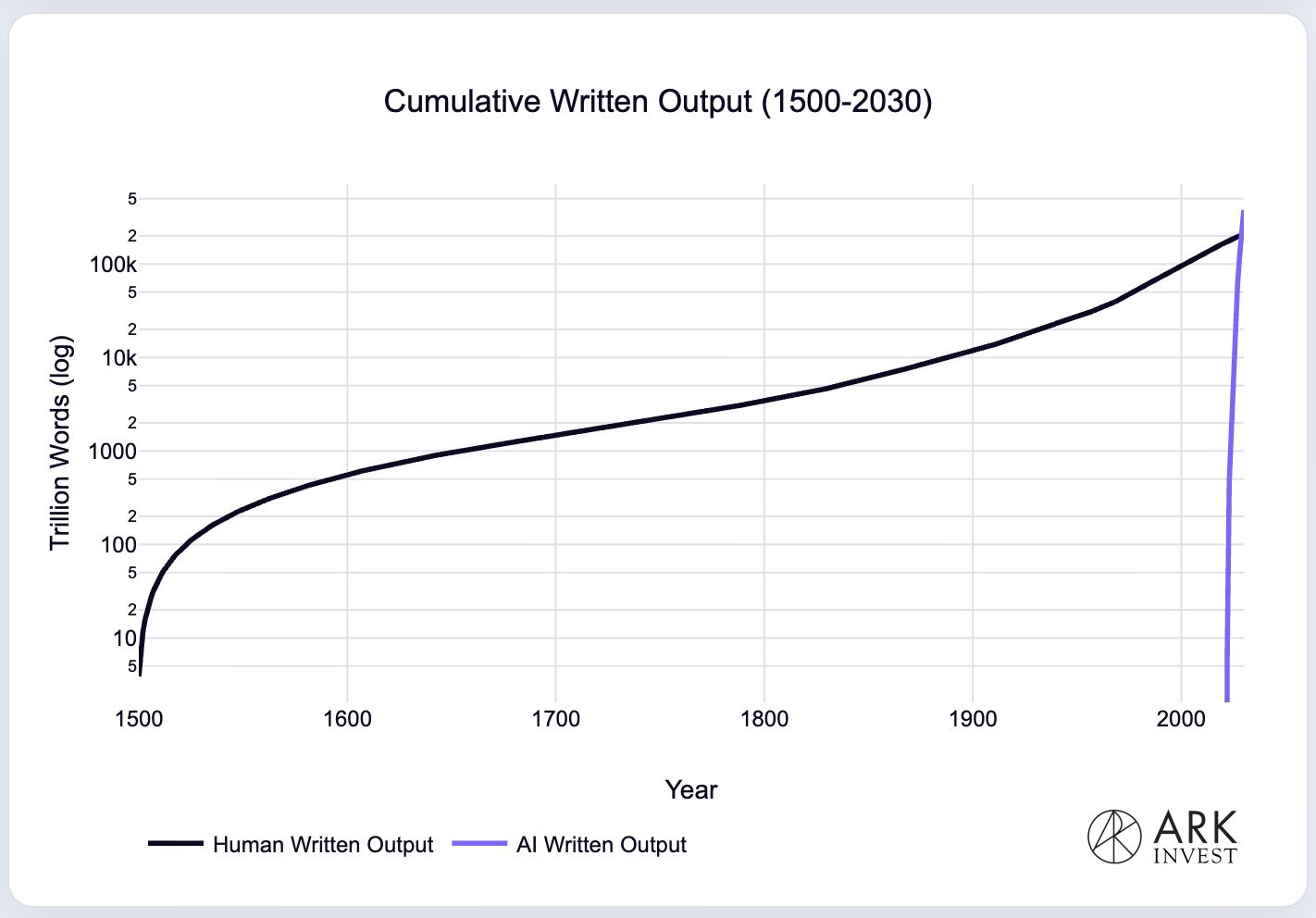
Wikipedia bans AI-generated articles. The policy was approved by a 40-2 vote
Related: WikiProject AI Cleanup
tropes.md - “A single file containing all cataloged AI writing tropes. Add it to your AI’s system prompt to help it avoid these patterns”
We can’t see it happening. It doesn’t make a sound. Nor do we feel anything moving. But thinking is physical… Just as words on paper occupy defined physical space when reading, and thus may contribute to better recall, so the letters we put on paper contain more personal and implicit markers to enhance memory… No wonder schools around the world are starting to regret their enthusiastic embrace of tablets and screens. How did educators forget to be sceptical?
We’ve lost 50% of literacy in the last fifteen years. So, that epiphenomenon of writers like me being attacked and abandoned by our friends running scared of social media was part of the progression towards illiteracy and the fundamental inability to morally deliberate, which now characterises our society… Someone who can’t read a book cannot deliberate, cannot think and cannot conceptualise, and therefore is a threat – particularly humans who, instead of conceptualising in isolation and being able to think inside their own heads, only think through their engagement with others.
Question
Can music ever be a luxury product?
Closing notes
You are reaching the end of the newsletter. Thanks so much for reading!
I hope it’s not been too much of an intrusion and if you liked this issue of the newsletter, please share or recommend to a friend or colleague.
There may be an occasional typo. Woops! There isn’t much I can do once the email has sent, but I do try to correct and update the web version.
Until next week…
RSS
Thanks for reading Creative Audio! Subscribe for free to receive new posts and support our work.