
N+N 174
Cognitive Load

Research
Cognitive Load Theory: “The concept of cognitive load was first presented by Sweller (1988) in relation to the effectiveness of conventional problem-solving methods for acquiring domain-specific knowledge and skills. Sweller (1988) indicated that working memory has a limited capacity and stressed the importance of minimizing extraneous cognitive load to maximize learning.”

Around the web
When you are in a state of cognitive ease, you are probably in a good mood, like what you see, believe what you hear, trust your intuitions, and feel that the current situation is comfortably familiar. You are also likely to be relatively casual and superficial in your thinking.
Daniel Kahneman
Why is it that when we sit down and try to force an idea, nothing comes—or, if we succeed in forcing it, it feels stale and contrived? Why do the best ideas appear uninvited and at the strangest times, darting out at us like an impish squirrel from a shrub?
The key, in my opinion, has to do with what you think it is that’s doing the producing, and where. It’s easy for me to say that “I” produce ideas. But when I’ve finished something, it’s often hard for me to say how it happened—where it started, what route it took, and why it ended where it did.
Ideas are not products, as much as corporations would like them to be. Ideas are intersections between ourselves and something else, whether that’s a book, a conversation with a friend, or the subtle suggestion of a tree. Ideas can literally arise out of clouds (if we are looking at them). That is to say: ideas, like consciousness itself, are emergent properties, and thinking might be more participation than it is production. If we can accept this view of the mind with humility and awe, we might be amazed at what will grow there.
👉 It’s easy to record, hard to do well!
👉 In the unlikely event you missed the meteoric rise of Angine de Poitrine through early 2026, this is a great place to start. First impressions may be a little jarring, but stick with it. They’re an art project shaped by avant-garde and punk influences, weaving in microtonality and complex rhythmic structures to striking effect. The musicianship is sublime! Even the New York Times has taken notice. They may indeed be otherworldly. Khn’s unique guitar, pedal, and synchronisation setup, combined with highly dexterous footwork, has drawn significant attention. Here’s an interview with the luthier who constructed the custom double-neck instrument. The video below from David Bruce offers a helpful breakdown of their rhythmic (lots of polymeter) approach.
The Scores Project: “Artists working in and across the fields of visual art, music, poetry, theater, and dance at midcentury began to use experimental scores in ways that revolutionized artistic practice and opened up new forms of interdisciplinary collaboration… The Scores Project fosters a renewed sense of wonder at this innovative and historically complex moment in the history of art.”
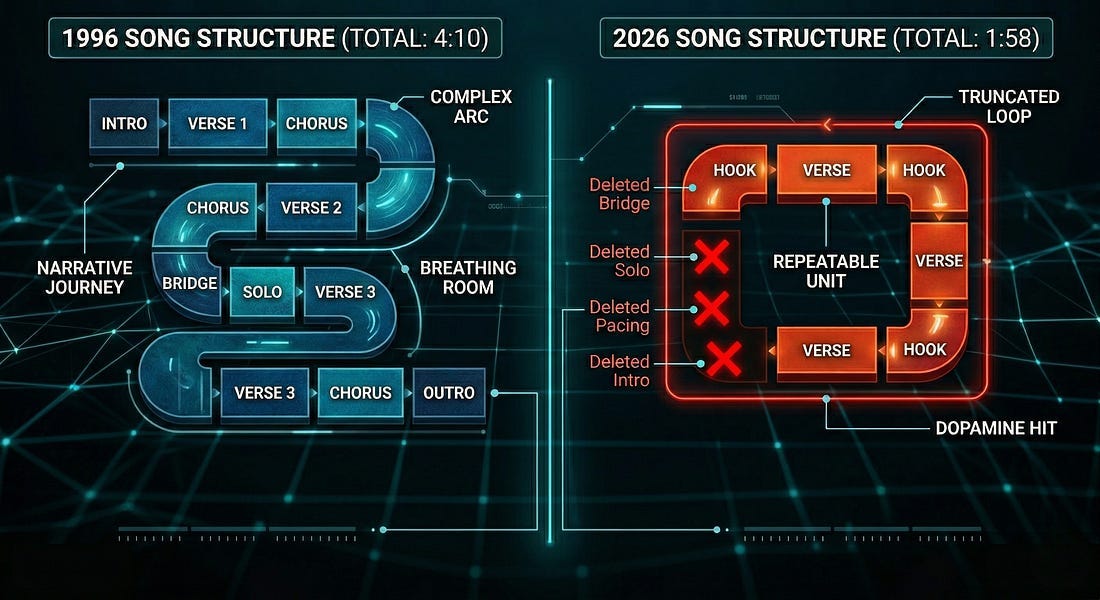
Research: Smartphone use in general spiked by 40%, with traffic fatalities increasing by 15% on the same days as major album releases (Taylor Swift, Harry Styles, Drake, Bad Bunny, and Kendrick Lamar).
In the UK, Ofcom’s Adults’ Media Use and Attitudes Report:
Just over half of adults (54%) say they use AI tools compared to three in ten (31%) last year
Most online adults (89%) know that companies collect their data and 31% can identify from a list all the main ways in which this happens. Awareness that online content is tailored has declined to 76% (from 85% last year
Overall confidence online is high (89%), but confidence in specific skills - spotting scams (82%), recognising advertising (81%), judging accuracy online (72%) - is lower
Posting and commenting on social media has declined from 61% to 49% this year. Exploration of new websites has also fallen, with only 14% using ‘lots’ of new sites (down from 24%) and 40% using none
Younger adults continue to drive video use and creation - 82% of 16-24s watch videos on social media and 42% of 25-34s post them. Platform use remains strongly age-skewed
The proportion of adults who feel the benefits of being online outweigh the risks has fallen to 59% (from 72% last year)
sound: Most people think they have a good ear…
Listening and watching
Things we’re interested in
The optimal state of inner experience is one in which there is order in consciousness. This happens when psychic energy—or attention—is invested in realistic goals, and when skills match the opportunities for action. The pursuit of a goal brings order in awareness because a person must concentrate attention on the task at hand and momentarily forget everything else. These periods of struggling to overcome challenges are what people find to be the most enjoyable times of their lives.
Flow suggests a waterway—something liquidly effortless, an unimpeded stream. But the wisdom of Csikszentmihalyi was to recognize that well-being is no lazy river. It is neither ease nor effortlessness that leads to the highest happiness. It is something close to their opposite. It is immersion in an activity that is hard, but just hard enough; it is the discovery of comfort at the outer realm of difficulty. Life feels best, not when it is smoothed with frictionlessness, but when it is filled with achievable challenges.
Netflix’s Game Controller is No. 1 in the App Store, and has held the position for two weeks
The Pokémon Company International just announced a new Pokémon-themed EDM event, “Pokémon Night Out”
Lana Del Rey, collaborating with David Arnold, released “First Light,” the official theme for IO Interactive’s upcoming game 007 First Light. More from the Missions & Audio Director, Dominic Vega
On or about June 2007, human character changed. To be more exact—because the phrase human character now feels antique—we might say instead that the human sensorium changed… a transition was set in motion, differentiating life before the omnipresent smartphone and life after, and dating its onset to the birth of the iPhone seems apt.
When people try to sell you on the idea that the future is already settled, it’s because it is deeply unsettled. I think that this promise of an artificial intelligent future is really just a collective anxiety that very wealthy, powerful people have about how well they’re gonna be able to control us in the future. If they can get us to accept that the future is already settled—AI is already here, the end is already here—then we will create that for them. My most daring idea is to refuse.
👉 What does it mean to be a serious person intellectually? “I think it means not being blown by the wind. It means thinking things through and taking your time to come to your views, not just leaping on an opinion you’ve seen floating past and then claiming it as yours like adolescents do when they’re trying out a posture. It means not claiming expertise where you don’t have any. It means not shying away from claiming expertise where you do have it. I reserve my right to be playful but I don’t think that means I’m unserious intellectually.” - Naomi Alderman
When a technology is this powerful and this unsettled, the choices that individuals and organizations make right now matter more. We can see the shape of the Thing now, but we can still influence the Thing itself, and what it means for all of us.
How is ChatGPT used? More for everyday life than work and heavily skewed towards practical guidance, information seeking, and writing.
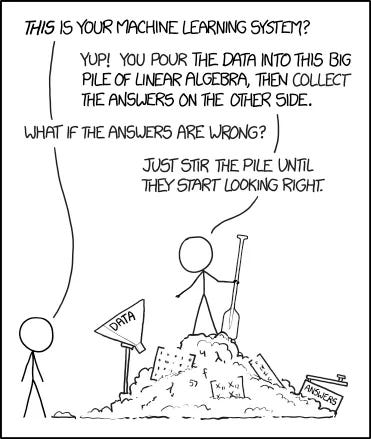
Scientists invented a fake disease. AI told people it was real: Bixonimania doesn’t exist except in a clutch of obviously bogus academic papers. So why did AI chatbots warn people about this fictional illness?
The A.I. backlash backlash: “The substance of the anti-backlash position at its broadest is something like: Actually, A.I. is quite powerful and useful, and even if you hate that, lots of money and resources are being expended on it, so it’s important to take it seriously rather than dismissing it out of hand.”
There’s a lot more to replacing labour than just automating tasks
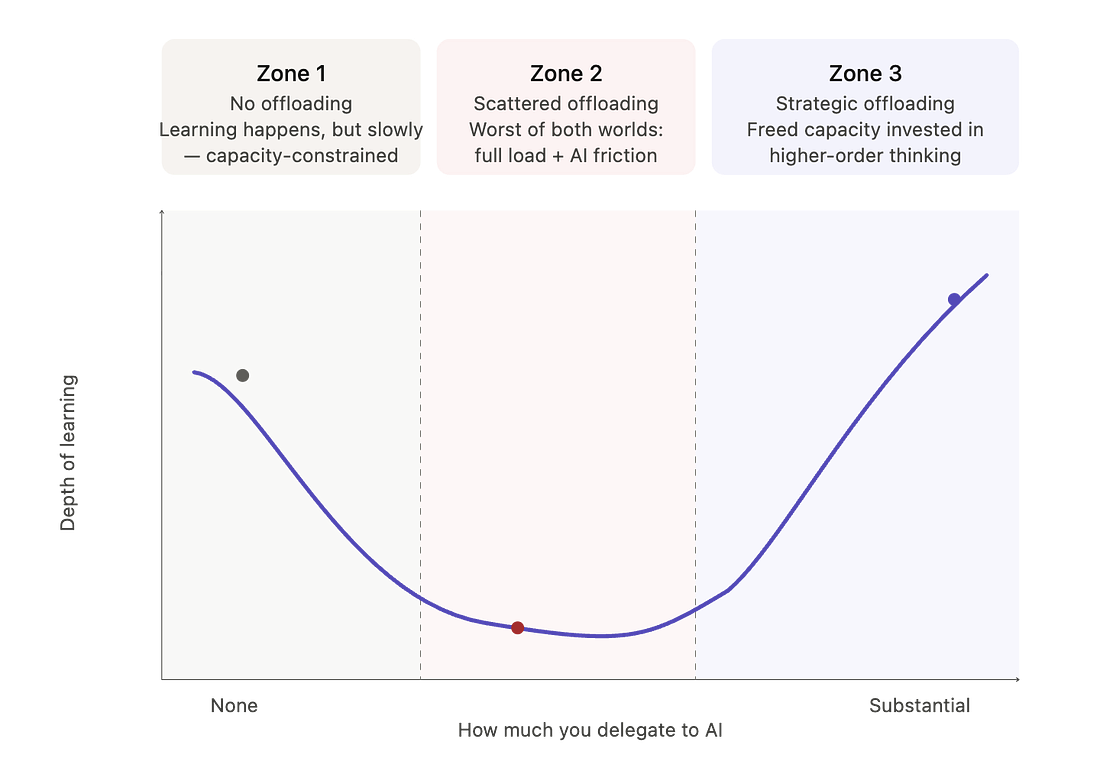
For context, a useful roundup of studies investigating the effects of AI on the brain
We gave an AI a 3 year retail lease in San Francisco and asked it to make a profit
Report: The AI Roadmap: How We Ensure AI Serves Humanity
A new study from Gallup found that young adults have grown less hopeful and more angry about artificial intelligence [Archive Link]
Research: A meta-analysis of 71 studies (98,000 participants) links heavy use of short form video to attention deficits, anxiety, declining academic performance, and addiction-like behaviour.
57 participants viewed either a continuous long video or multiple short videos matched for duration and content. Memory was tested with a recall task, and brain activity was measured with fMRI. Short video exposure led to poorer memory accuracy compared to the long video condition.
Question
What happens inside a professional foley session?
Closing notes
You are reaching the end of the newsletter. Thanks so much for reading!
I hope it’s not been too much of an intrusion and if you liked this issue of the newsletter, please share or recommend to a friend or colleague.
There may be an occasional typo. Woops! There isn’t much I can do once the email has sent, but I do try to correct and update the web version.
Until next week…
RSS
Thanks for reading Creative Audio! Subscribe for free to receive new posts and support our work.